When One Missed Step Could Cost A Shutdown
 Forklift Incident as a Lesson in Operational Discipline and Maintenance Culture
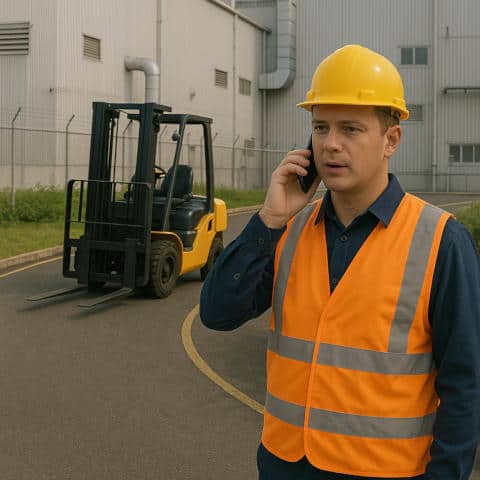
On a routine afternoon inside a busy industrial facility, a simple oversight nearly turned into a serious accident. A forklift left unattended on a mild incline began rolling backward, unnoticed, only stopping after hitting a road kerb just short of a distracted employee. While no one was injured, the close call served as a much-needed reminder: the most minor operational errors can trigger a cascade of failures, not just in safety but also in equipment reliability.
The Incident
The forklift was temporarily parked on an inclined section of the plant’s internal road. The operator stepped away without engaging the parking brake—an apparent deviation from the SOP. The slope, though mild, was enough for gravity to do its work. Down the bend, an employee stood with his back to the vehicle, speaking on the phone. Fortunately, the car was stopped by the kerb before contact. But the outcome could’ve been very different.
Maintenance Is More Than Lubrication – It’s Discipline
Though the forklift’s braking system was later confirmed to be fully functional, the near-miss exposed a gap in operational maintenance discipline. In a well-oiled machinery ecosystem, preventive measures go to greasing fittings or topping up fluids—they beyond also involve ensuring human behaviours align with equipment safety protocols.
This isn’t just an EHS concern. Consider what could happen if the brake system had failed due to neglected maintenance—perhaps water contamination in hydraulic fluid, worn seals, or degraded lubricant. Any of these would make the incident not just an operator error but a full-blown system failure.
Sequence of Events (Summarized)
- Forklift parked on an incline; parking brake not engaged.
- The operator stepped away, assuming it was secure.
- The forklift began to roll.
- Employee in the path, unaware of the danger.
- Vehicle halted by the kerb.
- Brakes found operational; root cause: human error.
Deeper Analysis: Reliability vs. Routine
Using the “5 Why's” technique, the root cause was traced to complacency, worsened by inconsistent training and weak supervisory follow-up. But from a maintenance and reliability standpoint, such incidents raise a red flag about how well operational procedures are internalized and enforced.
In maintenance culture, failure often begins with minor, ignored deviations: skipped checklists, assumed conditions, or a lack of follow-through. These are as risky as ignoring a vibration reading or oil analysis report.
Corrective and Preventive Measures
1. Checklist-Driven SOPs
Forklift SOPs were updated to include a mandatory walkaway checklist. This serves the same purpose as a pre-lube inspection—simple, quick, and vital.
2. Training, Now with Testing
Biannual refresher training is now mandatory, supported by quizzes to ensure retention. Similar to a post-training certification process.
3. Behavioural Safety Integration
Toolbox talks now include genuine incident reviews. This helps translate “lessons learned” into actionable frontline practices, much like reliability-centered maintenance teams do with failure histories.
4. Physical Zoning and Signage
Vehicle-pedestrian boundaries were re-marked and reinforced with barriers. Signage is important, but physical deterrents are far more effective in maintaining safety zones around machinery.
5. Enhanced Monitoring
CCTV and shift supervisors now track MHE parking practices. Surveillance is not about punishment—it’s about accountability and data, just like condition monitoring is for rotating equipment.
 6. Poka-Yoke for Parking
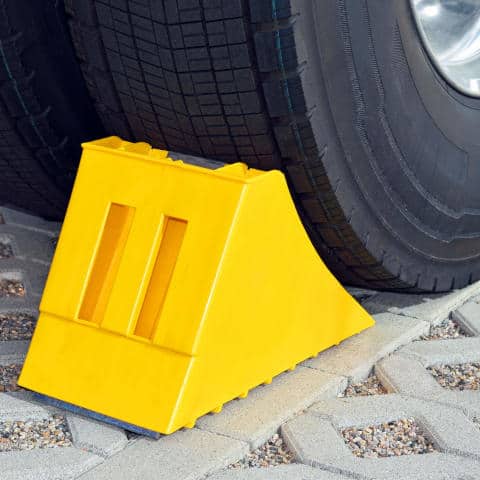
Wheel chocks were made mandatory for parked equipment—classic mistake-proofing, just like keyed fittings or colour-coded oil ports prevent lube mix-ups.
Lessons for Maintenance Leaders
- People are part of the system. Human reliability is just as important as machine reliability.
- Checklists are underrated. They prevent both near-misses and long-term damage.
- Training needs structure. Ad-hoc awareness isn’t enough—formal refreshers and testing help.
- Minor violations have major consequences. Today it’s a missed brake; tomorrow it could be a burned motor or seized bearing.
- Maintenance culture includes safety. The goal isn’t just to prevent breakdowns—it’s to ensure the whole operating environment stays under control.
Conclusion
This incident, while not resulting in physical injury or equipment damage, serves as a sharp reminder that in any plant, discipline is as important as diagnostics. Maintenance isn’t limited to tools and fluids—it includes behaviours, habits, and the ability to anticipate failure before it strikes.
In a well-run facility, even something as basic as setting a parking brake is treated with the same seriousness as changing critical lubrication. Because ultimately, both affect machine uptime, operator safety, and plant efficiency.
