Lubrication: The Engineering Backbone Of Industrial Performance
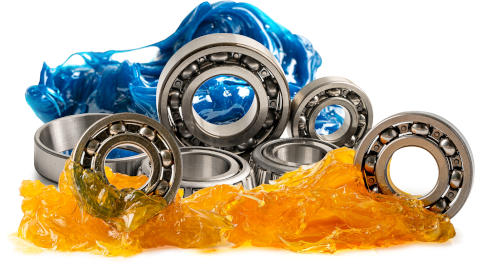 In advanced industrial systems, the choice and application of speciality lubricants are as critical as the mechanical design itself. These precision-formulated fluids and greases sustain reliability, efficiency, and safety across sectors that operate under extreme load, speed, temperature, and environmental stressors.
1. Lubrication Regimes & Engineering Principles
Understanding how lubricants function begins with the core lubrication regimes:
-
Elastohydrodynamic Lubricationn (EHL): Common in rolling-element bearings and gear contacts, where high pressures create a temporary elastic deformation of surfaces, enabling a robust fluid film. Precise film thickness control is vital to preventing metal-to-metal contact.
-
Hydrodynamic Lubrication: In journal bearings and other full-film conditions, the motion of surfaces drags lubricant into the contact zone, creating a pressure wedge that supports the load. Oil viscosity, temperature control, and flow stability determine performance.
-
Boundary Lubrication: When loads are high, speeds are low, or motion is intermittent, the lubricant film breaks down and surface asperities interact. Additives such as anti-wear agents and solid lubricants form protective layers that prevent adhesive wear.
2. Formulation Science – Beyond Base Oils
Modern speciality lubricants are engineered to perform under complex, real-world conditions that general-purpose oils cannot withstand. Key formulation elements include:
-
Synthetic Base Oils: Polyalphaolefins (PAOs) for thermal stability and oxidation resistance, Polyalkylene Glycols (PAGs) for excellent friction control in sliding contacts, and Perfluoropolyethers (PFPEs) for extreme chemical and temperature resistance.
-
Thickener Technologies in Greases: Calcium sulfonate for high-temperature and load-bearing stability, polyurea for oxidation resistance in electric motor bearings, and lithium complex for multi-purpose heavy-duty applications.
-
Additive Systems: Extreme pressure (EP) additives to prevent scuffing under high loads, corrosion inhibitors for hostile environments, anti-oxidants for long-term stability, and tackifiers for adhesion in slow-moving or open gear applications.
3. Sector-Specific Demands
Speciality lubricants are essential in applications where downtime or component failure carries high operational costs:
-
Cement, Mining, and Aggregates: Open gears, kiln support bearings, and crusher components face abrasive contamination, shock loading, and high temperatures. Lubricants must provide adhesion, wear resistance, and water resistance under extreme conditions.
-
Steel and Metal Processing: Continuous casters, rolling mills, and furnace conveyors operate at high temperatures and loads, requiring lubricants with exceptional thermal stability and oxidation control.
-
Automotive NVH (Noise, Vibration & Harshness): Damping greases and speciality lubricants are used in automotive interiors, seat mechanisms, and moving components to eliminate squeaks, rattles, and vibrations.
-
Forging and Metal Forming: Die lubricants and high-temperature pastes enable smooth metal flow, reduce die wear, and withstand extreme surface temperatures. In hot forging, lubricants act as release agents, thermal barriers, and friction modifiers, directly influencing surface finish and dimensional accuracy.
-
Metal Working: Cutting fluids, drawing lubricants, and machining oils are formulated to provide cooling, chip evacuation, and tool life extension. The right balance of lubricity and cooling capacity is essential to maintain tolerances and surface quality.
-
Food and Beverage Processing: NSF H1-certified lubricants ensure safety for incidental contact while maintaining resistance to water washout, oxidation, and microbial growth in bottling, packaging, and conveyor systems.
The Often Overlooked Performance Driver
Studies have shown that improper lubrication accounts for 43% of all mechanical failures. Selecting the correct lubricant, ensuring the correct volume, and maintaining its condition through monitoring are not just maintenance tasks—they are strategic reliability practices that can directly impact operational profitability.
 Molygraph’s Role in the Industrial Lubrication Ecosystem
For decades, Molygraph Lubricants has been advancing the science and application of speciality lubricants for demanding industrial environments in over 25+ countries. By combining synthetic base fluids, advanced additive chemistry, and an understanding of industry-specific challenges, Molygraph delivers solutions that optimize equipment performance, extend service intervals, and reduce unplanned downtime. Through engineering-driven lubrication solutions, Molygraph continues to support the backbone of industrial performance worldwide.
