Simple Habits To Keep Your Cardiovascular System Healthy
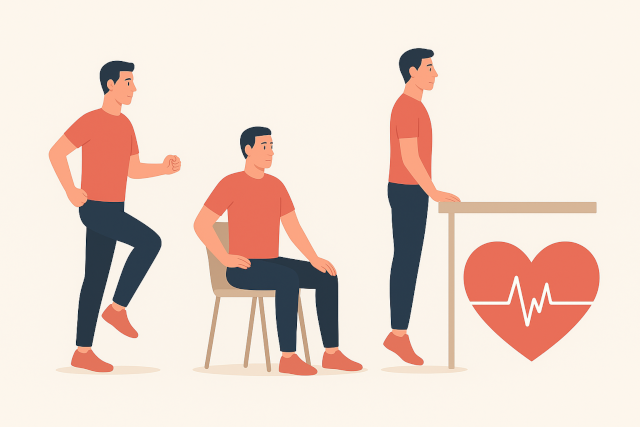 Every beat of your heart is a reminder that life is moving forward. With World Heart Day around the corner, I felt it was the perfect time to talk about the small yet powerful choices we can make to protect our most vital organ. Heart disease continues to be the leading cause of death globally, responsible for nearly one-third of all deaths worldwide, according to the WHO. These numbers are alarming, and they remind us that heart health is not something to take for granted.
The good news? You don’t need dramatic lifestyle overhauls to protect your cardiovascular system. Consistency in simple habits can go a long way in keeping your heart strong and resilient.
1. Move More, Sit Less
Long hours at a desk can slow circulation and strain the cardiovascular system. Try adopting the “60-2 rule”: for every 60 minutes of sitting, stand or walk for at least 2 minutes. Even small movements, such as stretching at your desk, taking stairs, or pacing during calls, improve blood flow and reduce cardiac strain.
2. Fuel Your Heart with the Right Foods
A diet rich in fibre, omega-3 fatty acids, and antioxidants strengthens the cardiovascular system. Simple swaps like nuts instead of chips, fruit instead of sugary snacks, and whole grains instead of refined carbs make a big difference. Stay mindful of salt and processed food intake, as both are linked to high blood pressure and heart disease.
3. Practice Mindful Breathing
Stress is one of the most underestimated threats to heart health. Mindful breathing for just a few minutes a day helps lower blood pressure and calm your nervous system. Try the 4-4-4 method: inhale for 4 seconds, hold for 4, exhale for 4. It’s simple enough to do between meetings or while waiting for your computer to restart.
4. Hydrate with Purpose
Dehydration makes your heart work harder to pump blood. Keep a water bottle at your desk and aim to sip steadily throughout the day.
5. Sleep: Your Heart’s Silent Protector
Quality sleep (7–8 hours) allows your cardiovascular system to rest and repair. Poor sleep has been directly linked to hypertension and increased risk of heart disease. Establishing a consistent sleep routine and limiting screen time before bed can significantly support heart health.
6. Routine Health Check-ups
Don’t wait for warning signs. Regular monitoring of blood pressure, cholesterol, and sugar levels helps in early detection and prevention of cardiovascular risks.
You don’t need hours in a gym to protect your heart. A few intentional movements sprinkled across your workday can go a long way in keeping your cardiovascular system strong.
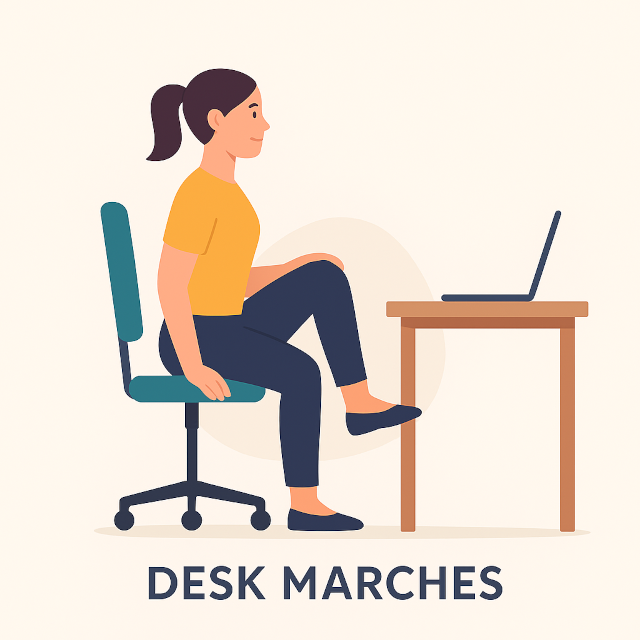 1. Desk Marches – Pump the Circulation
- Sit upright, lift one knee at a time as if marching at your desk.
- Do 20–30 lifts per leg, 2–3 times a day.
- Boosts circulation, prevents stiffness, and keeps blood moving.
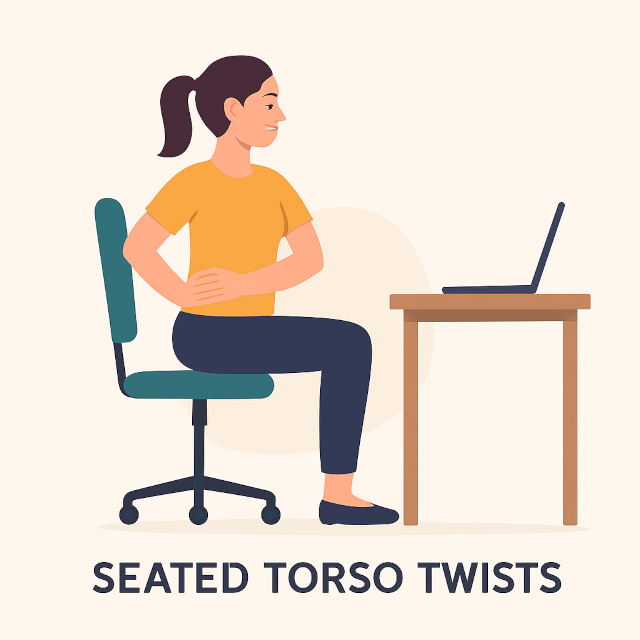 2. Seated Torso Twists – Open the Chest
- Sit tall and twist gently, hold for 10–15 seconds.
- Repeat on the other side.
- This opens up your chest, aids posture, and relieves pressure on your heart and lungs.
 3. Calf Raises – Strengthen the Heart’s Pump
- Stand, rise onto your toes, hold for 3 seconds, and come down.
- Repeat 15–20 times.
- Simple but effective for improving circulation and keeping your leg muscles (the “second heart”) active.
4. Desk Push-Ups – A Quick Heart Booster
- Place both hands on the edge of your desk, step back, and do incline pushups.
- 10–12 reps.
- Strengthens the upper body and engages large muscle groups.
 Your cardiovascular health is not built in a single workout or a single day; it is built every day, with consistent small actions. Whether it’s marching at your desk, hydrating between tasks, or taking mindful breaths before a meeting, these little choices keep your heart strong and resilient.
The best part? Protecting your heart doesn’t demand hours in the gym or complicated routines. It only asks for awareness and commitment in the moments you already live, at your desk, in between calls, or while walking to your next meeting.
Think of these habits as “tiny deposits” in your heart’s savings account. They may feel small, but over time, they add up to longterm strength, focus, and well-being.
