Publisher’s Note
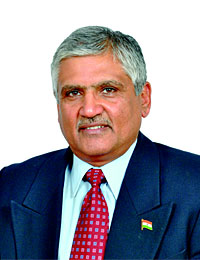 If India’s growth story is being powered by advanced technology and a robust 8%-plus economy, the silent enabler inside every refinery, steel mill, and power plant is still a lubricating film only a few microns thick. As our industrial centres hum with the energy of "Make in India," the pressure on rotating assets has never been greater. Yet, a critical vulnerability persists: The industry continues to treat lubricants as a consumable commodity to be purchased, rather than a precision-engineered machine component to be specified. This month’s cover story is designed to shatter that procurement myth.
In today’s high-density operating environment, the idea of a "standard" lubricant has disappeared. Indian industry is moving toward continuous-duty cycles where equipment runs hotter and under more variable loads than ever before. This reality has rendered price-driven selection obsolete. When we view a lubricant as a "consumable," we look for the lowest cost per drum. When we view it as a primary machine component, we look for oxidation stability, shear strength, and additive chemistry that directly safeguard the bottom line. We must recognize that the lubricant is often the only thing standing between a high-value asset and catastrophic surface degradation; it is an investment in surface integrity, not a mere operational cost. The cost of a wrong choice is no longer just a shortened drain interval; it is a quiet erosion of profitability through varnish, sludge, and energy loss.
Modern best practice demands that we treat lubricant selection as a specialized subset of Reliability-Centered Maintenance (RCM). In practical terms, this means analysing India’s specific challenges—high ambient temperatures and humidity—against the lubricant’s molecular architecture. Whether deciding between a mineral oil or a high- performance synthetic, the choice must be grounded in asset criticality and evidence-driven specifications rather than brand familiarity or a procurement spreadsheet. Modern lubricants are now formulated with molecular precision to serve as dynamic heat-transfer agents and chemical barriers; selecting them requires an engineer's eye, not just a buyer's pen. Furthermore, as sustainability becomes a non-negotiable metric, the right lubricant acts as a primary lever for reducing carbon footprints by lowering frictional energy consumption and extending oil life. If you wouldn't settle for a sub-standard bearing to save a few rupees, you cannot afford to settle for a sub-optimal fluid film.
This strategic shift is the central theme of our current cover story. The article provides a high-level roadmap to help you move beyond price sheets and toward a methodology that prioritizes asset safety and lifecycle cost. It bridges the gap between laboratory data and plant-floor reality, offering insights that help procurement leaders align with reliability engineers to achieve operational excellence. By redefining the selection process, we move from reactive replenishment to a Total Cost of Ownership (TCO) model that values the "long-term health" of the asset over the "short-term savings" of the invoice.
As we step into 2026, it is worth pausing to recognize the resilience our community has demonstrated. The continued engagement of our readers—especially through the regional grit of our "From the Asian Desk" perspectives—keeps our mission grounded in real-world solutions. At Machinery Lubrication India, we believe that changing how you perceive the fluid in your machine is the most accessible lever for improving reliability and driving plant-wide efficiency. This issue serves as a call to action to align our technical choices with the same ambition that drives our national industrial goals.
As we celebrate the harvest season across our diverse nation, may this time of abundance bring renewed energy and prosperity to your professional and personal lives. On behalf of the entire team, I wish you a joyful festive season and a reliably operating New Year.
Let us keep precision at the heart of our operations. We advance together.
Warm regards,
Udey Dhir
