Lubricant Forensics in Machine Failure Analysis
Use lubricant evidence alongside operating data, filter inspection and wear analysis to investigate machine failures.
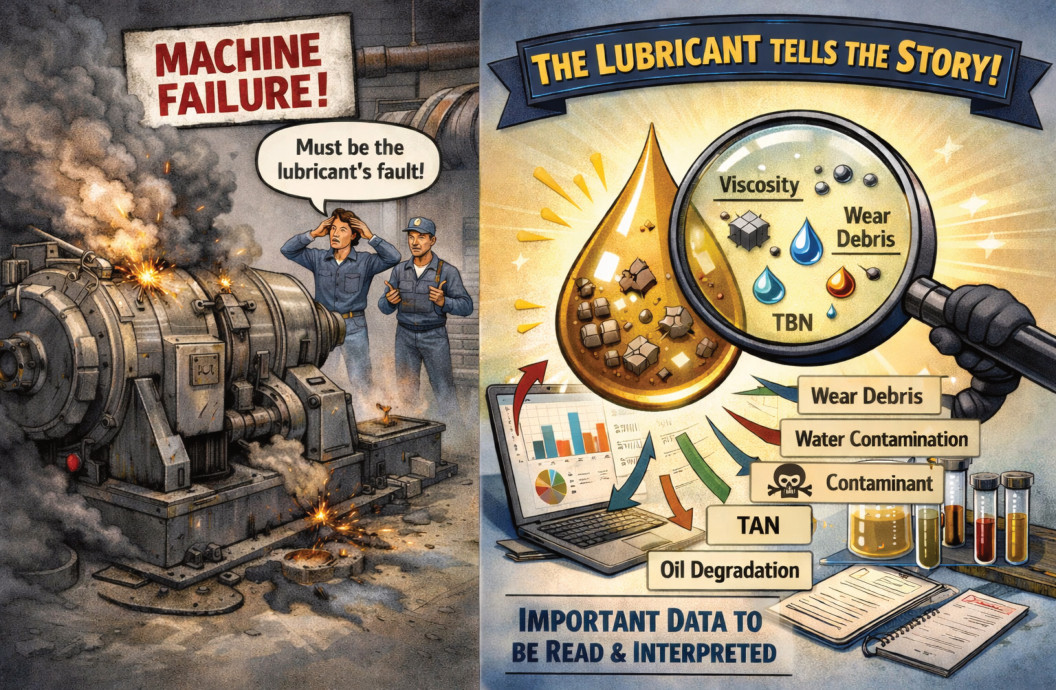
Catastrophic machine failures create high-pressure situations for maintenance teams. Management demands immediate answers while technical staff search for logical explanations. During preliminary troubleshooting, personnel often focus on the lubricant because it is accessible and easy to replace.
Initial hypotheses frequently cite poor oil quality or incorrect specifications. Operational urgency drives immediate action to reduce downtime. However, replacing lubricant without taking a representative sample can destroy critical forensic evidence. This quick-fix approach restores short-term operation but risks concealing the root cause of failure.
Reasons Lubricants Are Misidentified as Failure Causes
Lubricants circulate through the entire mechanical system. Because they are dynamic fluids, preliminary assessments often blame them prematurely for machine failures.
A lubricant shifts in color and clarity as it interacts with heat, load, and contaminants. Technicians without chemical training may view darkening oil as the primary cause of breakdown. Evaluating metallurgical fatigue in bearings or gears requires specialized laboratory expertise. In contrast, changing darkened fluid is fast and simple.
Adhering to the 5R principles—Right lubricant, Right quantity, Right time, Right point, and Right method—helps prevent lubrication-induced failures. Maintenance programs must keep fluid Clean, Cool, and Dry.
Instead of discarding used oil as waste, treat it as a diagnostic instrument. Disposing of fluid without capturing samples limits the technical team’s ability to investigate the failure. Used oil analysis identifies internal conditions like misalignment or overheating before catastrophic failure occurs.
Interpreting Lubricant Forensic Data
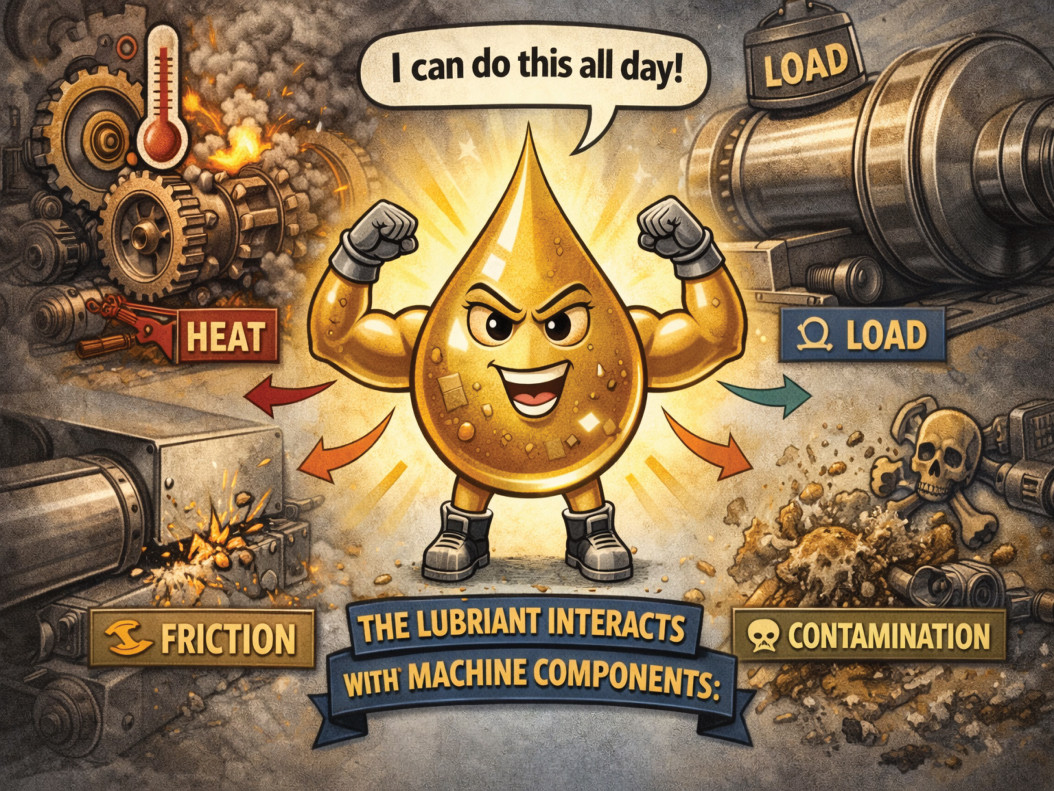
Lubricants contact nearly all internal components. They absorb heat, withstand shock loads, separate metal surfaces, and transport contaminants. Nearly every significant physical and chemical interaction leaves a measurable forensic trace.
Used Oil Analysis (UOA) must integrate with operational data, filter inspections, and magnetic plug findings. Laboratory testing evaluates several key parameters:
- Viscosity (ASTM D7279): Measures fluid flow resistance changes caused by thermal stress, oxidation, fuel dilution, water, or cross-contamination.
- FTIR Analysis (ASTM E2412): Identifies chemical changes, including oxidation, nitration, sulfation, soot, fuel contamination and water contamination. Rising oxidation typically indicates thermal stress from cooling inefficiencies or sustained overloading.
- TBN (ASTM D2896) & TAN (ASTM D664): Tracks reserve alkalinity, detergent additive depletion, and acidic byproduct accumulation.
- ICP Spectroscopy (ASTM D5185): Measures elemental wear metals such as Fe, Cu, Al, and Pb to evaluate component wear. ASTM D6224 offers general guidance on monitoring industrial lubricants.
- PQ Index (ASTM D8184): Quantifies total ferrous content. High PQ values combined with low Fe ppm via ICP often point to the presence of large ferrous wear particles.
- Analytical Ferrography (ASTM D7690): Examines particle size, morphology, and quantity to classify wear modes, such as rubbing, cutting, abrasive, or spherical particles.
- Specialized Testing: Uses MPC for varnish potential, RULER for antioxidant levels, RPVOT for oxidation stability, and Karl Fischer for precise water content.
Practitioners must balance forensic depth, testing cost, and turnaround time against criticality. Selecting parameters based on asset priority ensures efficient diagnostic results.
Transitioning from Waste Disposal to Proactive Diagnostics
Used lubricant is an information carrier. Changing oil without diagnostic sampling may obscure underlying mechanical defects like misalignment, overheating, or air entrainment. Uncorrected issues are likely to accelerate the degradation of the fresh fluid.
Integrate fluid analysis into condition monitoring workflows by establishing clear condemning limits. Maintaining fluids within operational targets disrupts failure progression early. Treat lubricants as primary investigative tools to protect plant assets.
Disclaimer
The insights shared in this article reflect the author’s field experience and professional observations. They do not necessarily reflect the official policies of affiliated organizations. Operating conditions vary; consult certified lubrication specialists prior to changing maintenance strategies.
About the Author

M. N. Ahbab is a lubrication professional with field experience across heavy industries, including cement, mining, power generation, and marine sectors.
Keep reading